|

March 10, 2026
How to Create Recurring Revenue Streams in a Tax Practice: A Growth Guide
For most tax professionals, the year follows a predictable yet exhausting rhythm. There is the frantic sprint of "Tax Season" from January to April, followed by a long, quiet stretch where the phones stop ringing and the cash flow begins to dry up. This "feast or famine" cycle isn't just stressful; it limits your firm's growth and makes it incredibly difficult to scale.
The secret to breaking this cycle lies in a shift from one-time transactions to a steady income stream. Learning how to create recurring revenue streams in a tax practice is the single most effective way to stabilize your business, increase your firm's market value, and provide better results for your clients.
TSG ProAdvisor specializes in helping tax and accounting professionals move beyond the traditional seasonal model. In this guide, we’ll explore how you can transform your practice into a year-round powerhouse using modern financial strategies.
1) Why Every Tax Practice Needs a Recurring Revenue Model
In a traditional tax practice, revenue generates from a high volume of work compressed into a few months. While this can lead to a profitable quarter, it creates a "hollow" business that is difficult to manage. Transitioning to a recurring revenue model changes the fundamental DNA of your firm.
(i) Boosting Your Business Valuation
One of the most overlooked benefits of recurring revenue is its impact on business valuation. If you ever decide to sell your practice or bring on a partner, a buyer will look at the predictability of your earnings. A firm that relies on time sales (billing by the hour for one-off returns) is valued much lower than a firm with 500 clients on a monthly subscription model. Predictability equals value.
(ii) Enhancing Customer Retention
When you only talk to a client once a year, you are a commodity. When you provide year-round advisory services, you become a partner. This depth of service naturally increases customer retention. By maintaining consistent contact, you stop being the "tax guy" and start being the "trusted advisor." High-level customer relationships are the bedrock of recurring revenue businesses, as they significantly lower your customer churn and keep clients engaged with your brand.
2) Exploring the Types of Recurring Revenue Models for Tax Pros
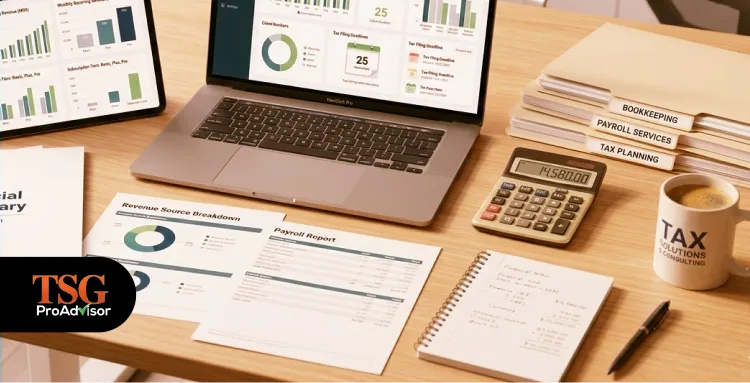
Not all recurring models are created equal. Depending on your client base and your personal expertise, you might choose one or a mix of several types of recurring revenue models.
(i) The Subscription Model
This is the gold standard for modern accounting firms. Instead of billing $500 for a tax return once a year, you might charge $75 a month for "Tax Maintenance." This covers the year-end return, mid-year tax planning, and unlimited quick-call support. According to industry insights often discussed on platforms like Yahoo Finance, shifting to subscriptions allows firms to manage their billing cycles more effectively.
(ii) The Membership Model
A membership model often focuses on access and community. Perhaps you offer a "Small Business Growth Club" where members pay a monthly fee to receive monthly financial insights, quarterly strategy webinars, and priority tax filing. This creates a sense of belonging and perceived value that goes beyond just "filing papers."
(iii) Tiered Advisory Packages
For many, the best product or service to transition into recurring revenue is Fractional CFO or Tax Strategy services. These are high-ticket items where you provide deep-dive financial reporting and strategy sessions every month. If you are curious about how to build the leadership skills necessary for these high-level roles, check out our blog on The Role of Mentorship in Leadership Development.
3) Steps to Implementing Recurring Revenue in Your Firm
Making the switch requires careful planning. You can’t just change your prices overnight; you need a system that supports a recurring business model.
Step 1: Audit Your Service Offerings
Look at the work you already do. Which tasks are repetitive? Which clients call you throughout the year for advice they aren't paying for? Those are your first opportunities for recurring revenue. By packaging these into a defined product or service, you create something tangible for the client to buy into.
Step 2: Establish Consistent Billing Cycles
One of the biggest hurdles for tax pros is the transition from "bill on delivery" to "bill on schedule." To keep your cash flow healthy, you should set up automated billing cycles (usually the 1st or 15th of the month). This ensures a steady drip of income regardless of whether it's April or August. For those just starting out, learning How to Start a Successful Career as a Tax Professional in 2026 can provide the foundational steps needed to set up these systems from day one.
Step 3: Master Revenue Recognition
From an accounting perspective, recurring revenue requires a different approach to revenue recognition. You must ensure you are recognizing income as the service is performed over the life of the contract, not just when the cash hits the bank. Proper financial reporting is vital to ensure your firm’s books stay clean and audit-ready.
4) Managing Your Churn Rate and Client Satisfaction
The biggest threat to recurring revenue streams is "churn." Your churn rate is the percentage of clients who cancel their subscriptions over a specific period. If you have 100 monthly clients and 2 leave every month, your churn is 2%.
To keep this number low, you must focus on:
Consistent Communication: Don't let a month go by without providing value. Even a simple "Tax Tip of the Month" email keeps you top-of-mind.
Automation: Use tools to streamline your workflow so you can spend more time advising and less time chasing paperwork. Learn more about this in our article on Streamlining Audit Processes with Tax Software.
Quality Control: High accuracy leads to high trust. As we've noted in our piece on How Regular Training Can Improve Your Accounting Accuracy, staying sharp is essential for retaining long-term clients.
Industry news from 1stheadlines.com often highlights that firms with the lowest customer churn are those that lean into technology to enhance the human element of their service.
5) Overcoming the "Hourly Billing" Mindset

The transition to recurring revenue streams in a tax practice is often more of a mental hurdle than a logistical one. Many tax pros feel guilty charging a monthly fee when they aren't "doing work" every single day.
However, you aren't charging for your time; you are charging for your availability and your expertise. A client pays for a subscription model because they want the peace of mind that comes with knowing their tax strategist is only a phone call away. They are paying for the prevention of problems, not just the fixing of them.
Resources from organizations like the Philadelphia Alliance for Capital and Technologies (PACT) suggest that professional service firms that prioritize value-based pricing over hourly billing see significantly higher profit margins.
6) The Role of Technology in Scaling Recurring Revenue
You cannot manage 500 monthly subscriptions manually. To succeed, you need a tech stack that handles the "boring stuff" so you can focus on the "big stuff."
Automated Invoicing: Use software that automatically drafts fees from client accounts.
Client Portals: Give clients a place to see their reports and upload documents 24/7.
Internal Automation: Use AI and tax software to reduce the time it takes to process data.
For a deeper look at the future of our industry, read our blog on How Technology is Revolutionizing Tax and Accounting Education. Using modern tools allows you to scale your income stream without needing to hire a massive team.
In the health sector, companies like Bask Health have mastered the recurring model for patient care; tax practices can learn a lot from how they package continuous "wellness" into a monthly fee. Similarly, creative firms like Deer Designer show how "design-as-a-service" (a monthly creative subscription) can stabilize a notoriously volatile industry. Tax preparation is no different—it's about providing ongoing value.
7) Grow Your Practice with TSG ProAdvisor

Whether you are looking for industry-leading training to improve your accuracy or you need a mentor to help you design your first membership model, we have the tools you need. Our mission is to help you work with more confidence and achieve long-term success through sustainable business practices.
Based in the heart of the US, we understand the local tax landscape and the specific challenges faced by American tax practitioners. We help you move from being a "preparer" to a "pro-advisor."
8) Start Your Transition Today
Learning how to create recurring revenue streams in a tax practice is the future of the industry. By moving away from time sales and toward a subscription model, you create a business that is more valuable, more stable, and more enjoyable to run.
Stop waiting for the "Big Tax Season" to pay your bills. Start thinking about how you can serve your clients every single month. With careful planning, the right business model, and a commitment to customer relationships, you can turn your tax practice into a recurring revenue engine.
For more insights and world news on business trends, you can always check out WN.com. But when you're ready to take the next step in your professional journey, TSG ProAdvisor is here to help you lead the way.
Recent Blogs